Newsroom

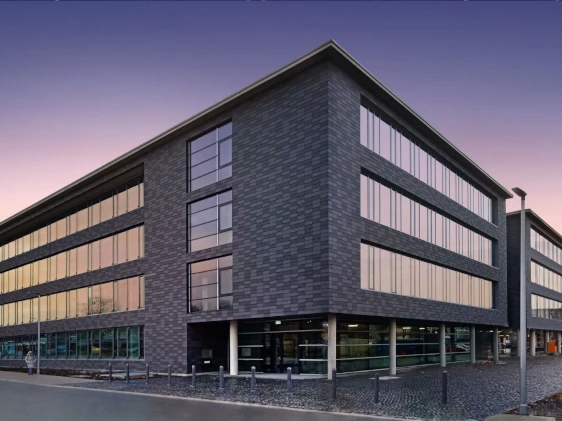
Following an interim phase at Mathematikon, STRUCTURES has relocated its Neuenheimer Feld offices to their designated location on the third floor of the “EINC” building INF 225a. Together with the theory centre Collis Philosophicus at Philosophenweg, INF 225a now serves as one of two main locations where the cluster has an office presence, and as a hub for its community and activities.
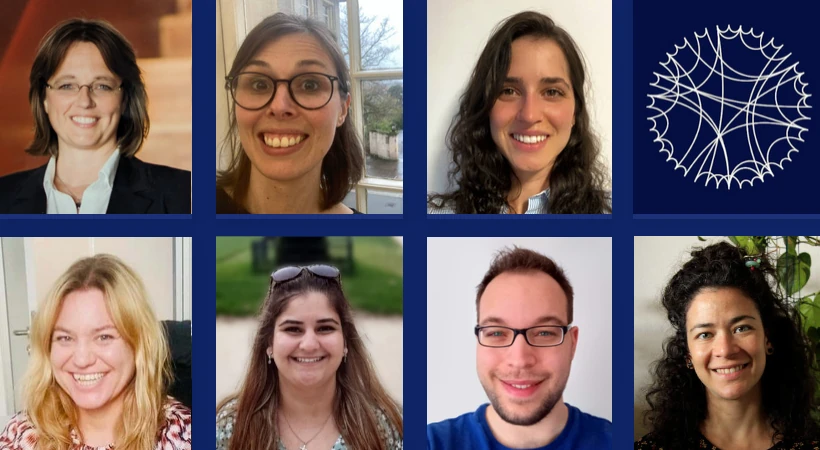
The STRUCTURES Project Management Office plays a key role in supporting and coordinating these activities. It offers comprehensive services for all cluster members, ranging from administrative support related to membership, travel funding, and the guest programme to the coordination of internal and public events. In addition, the office oversees equal-opportunity initiatives including the STEPS Programme, the parent–child offices “KIDS” operated in collaboration with IsoQuant, and the cluster’s outreach activities.
Directly adjacent to the new office rooms at EINC is Oberstübchen – the cluster's main scientific venue for seminars, workshops, and meetings. The Oberstübchen is part of STRUCTURES College, an academic unit dedicated to fostering international scientific exchange across disciplines and career stages. Activities of the College include the guest programme, the weekly STRUCTURES Jour Fixe as a central forum for exchange, and research-oriented teaching measures – one example being the regular meetings of STRUCTURES' “Crowds” on topics such as Mathematical Physics, Computational and Quantum Physics. The expression “Oberstübchen” is a German colloquial for brain, literally “upper room.”
For practical information related to meetings and room bookings of the Oberstübchen, all STRUCTURES members are welcome to contact office@structures.uni-heidelberg.de.
As part of its broader role as a research facility, EINC is becoming a hub for STRUCTURES' experimental activities in the direction of physical computation – and home to the groups of various STRUCTURES members, including Markus Oberthaler, Wolfram Pernice, Johannes Schemmel, and Julian Schmitt. The central approach to research is interdisciplinary – bridging physics with computer science in order to explore new paradigms of information processing. Physical computation refers to approaches going beyond von-Neumann computing architectures, building on physical structures available in highly controllable physical systems based on electrons, photons and atoms.
Contact address:
STRUCTURES Project Management Office
Im Neuenheimer Feld 225a and Philosophenweg 12
D-69120 Heidelberg
+49 (0) 6221-54 9186
office@structures.uni-heidelberg.de